
 Ελληνικά

The photo may not represent 100% of the product features.
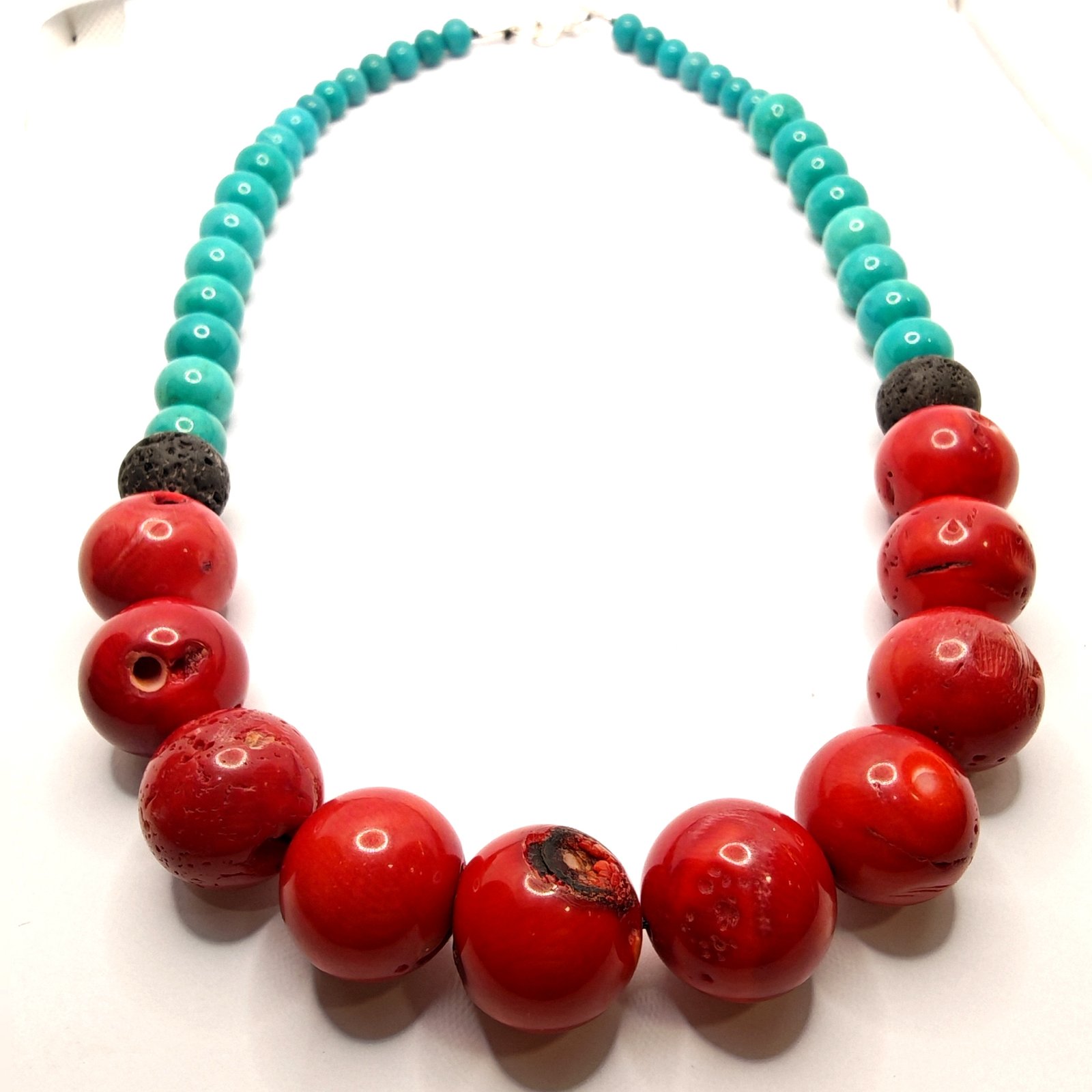
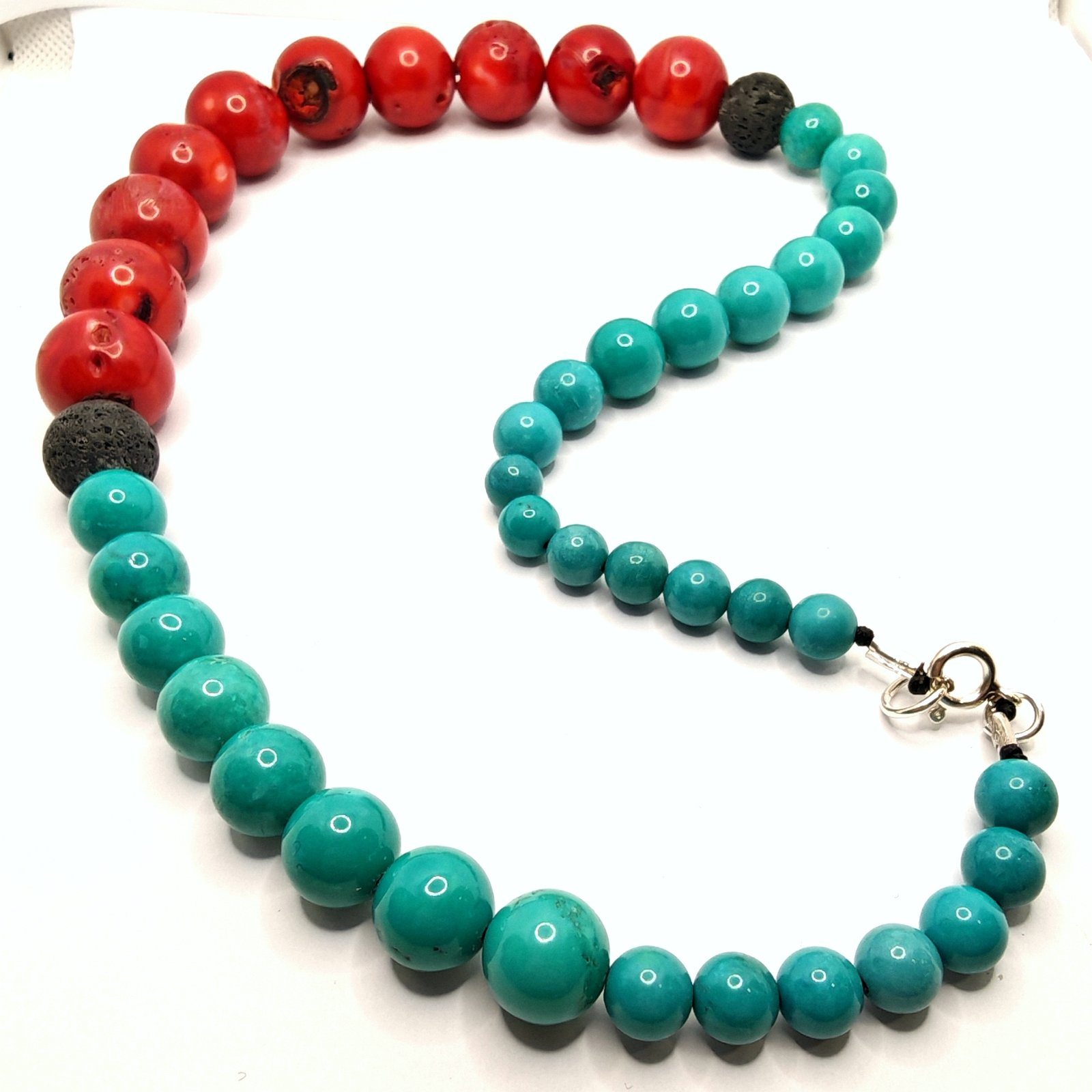
Coral Necklace BC0023
Necklace featuring coral and turquoise with volcanic lava, secured with a 925 sterling silver safety clasp.
Its length is approximately 57 cm, with beads ranging from Ø8 mm to 19 mm arranged asymmetrically.
Accompanied by a certificate of authenticity.
195,00 €
In stock
Coral is the skeleton of many small marine organisms that comprise a colony. These organisms are polyps, each a few millimeters in size. When a new polyp is born, it attaches its skeleton to the colony and thus expands it. These organisms are polyps, each a few millimeters in size. When a new polyp is born, it attaches its skeleton to the colony and thus expands it. In coral colonies, along with the polyps, some single-celled algae coexist, which photosynthesize and supply food to the polyps, and at the same time secrete pigments that color the colonies, i.e. the corals. Corals have a hardness of 3.5 and a specific weight of 2.6. The colors of corals are pink-red, beige, and white.
Turquoise is an opaque, bluish-green mineral, a hydrated copper & aluminium phosphate, with a high aluminium content. The natural gemstone is rare and has been prized as an ornamental gemstone for thousands of years because of its unique hue. It is considered to bring peace of mind, relieve stress and promote self-confidence. In Persia, at the time of Alexander the Great, turquoise was used on engagement rings, since according to the tradition, it signified trustworthy relationships.
Lava is the molten substance released by volcanoes, and is an Italian word meaning ‘flooding’. The Earth’s crust is largely made up of solidified lava. Lava is often used to make jewelry. In fact, lava and gagate jewelry were also fashionable in the 19th century during the so-called Victorian period.
tags: coral
| Material | Precious/Semi-Precious Stones |
|---|
All texts, product descriptions, and photographs are the intellectual property of KAHRAMAN. Any reproduction, distribution, or use, in whole or in part, without prior written permission is strictly prohibited. All rights reserved.
Related products
220,00 €
179,00 €
1.180,00 €
150,00 €
159,00 €
Coral is the skeleton of many small marine organisms that comprise a colony. These organisms are polyps, each a few millimeters in size. When a new polyp is born, it attaches its skeleton to the colony and thus expands it. These organisms are polyps, each a few millimeters in size. When a new polyp is born, it attaches its skeleton to the colony and thus expands it. In coral colonies, along with the polyps, some single-celled algae coexist, which photosynthesize and supply food to the polyps, and at the same time secrete pigments that color the colonies, i.e. the corals. Corals have a hardness of 3.5 and a specific weight of 2.6. The colors of corals are pink-red, beige, and white.
Turquoise is an opaque, bluish-green mineral, a hydrated copper & aluminium phosphate, with a high aluminium content. The natural gemstone is rare and has been prized as an ornamental gemstone for thousands of years because of its unique hue. It is considered to bring peace of mind, relieve stress and promote self-confidence. In Persia, at the time of Alexander the Great, turquoise was used on engagement rings, since according to the tradition, it signified trustworthy relationships.
Lava is the molten substance released by volcanoes, and is an Italian word meaning ‘flooding’. The Earth’s crust is largely made up of solidified lava. Lava is often used to make jewelry. In fact, lava and gagate jewelry were also fashionable in the 19th century during the so-called Victorian period.
tags: coral
| Material | Precious/Semi-Precious Stones |
|---|