
 Ελληνικά

The photo may not represent 100% of the product features.
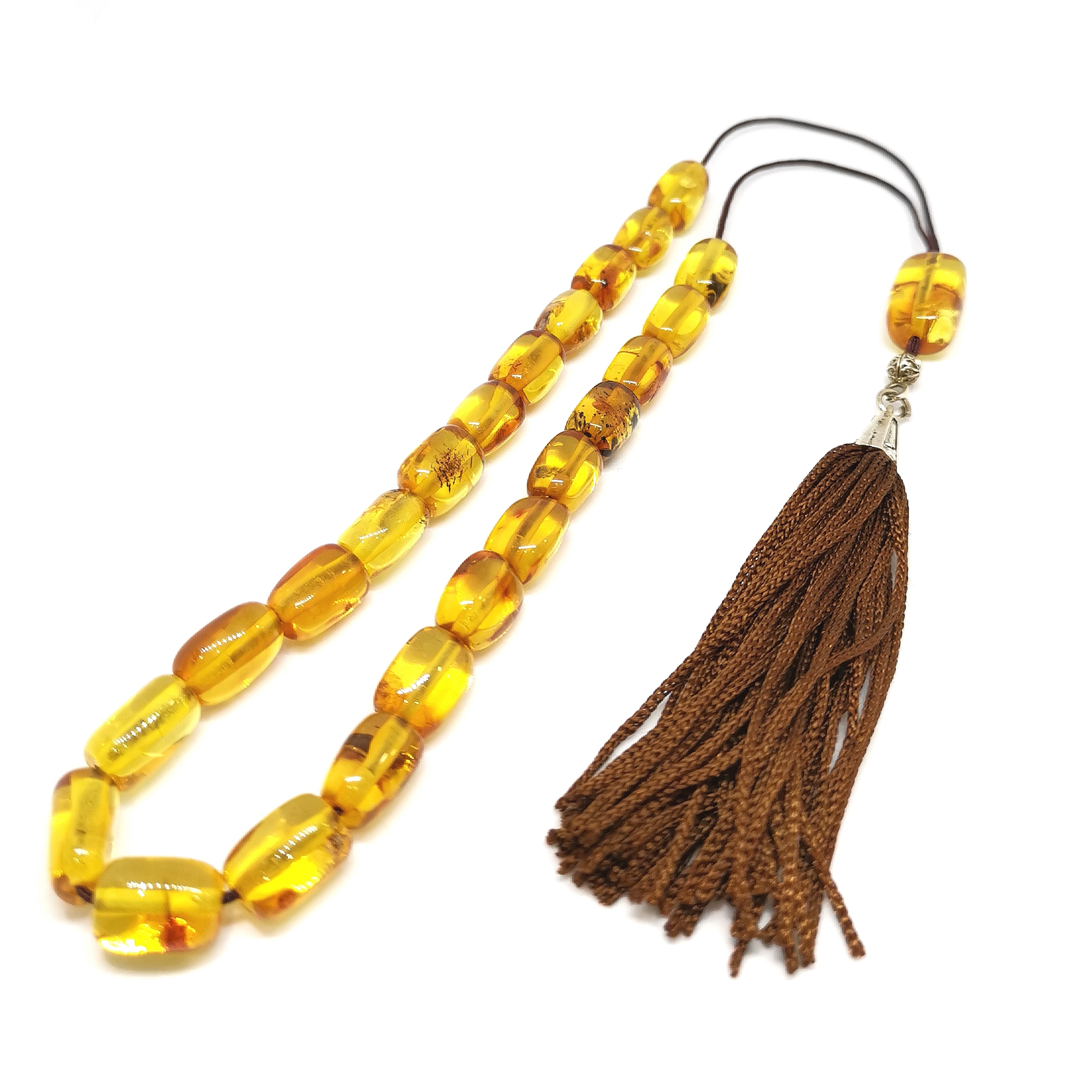
Pure Baltic Amber Komboloi AA0049
Handmade komboloi made of 21 pure Baltic amber beads sized 9 mm x 13 mm threaded on a highly durable paracord.
Total length: 25 cm | Weight: 21 g
Accompanied by a Certificate of Authenticity by the House of KAHRAMAN.
195,00 €
In stock
Amber
Amber is one of the oldest and most valuable natural organic materials used by humans. Although it is often referred to as a gemstone, it is actually not a mineral, but fossilized plant resin, which originated mainly from ancient coniferous trees millions of years ago. Over time, the natural resin underwent complex geological processes, such as pressure, temperature, and polymerization, gradually transforming into the amber we know today.
Name
The ancient Greek name “elektron” gave its name to electricity. Ancient Greeks observed that when amber is rubbed with a cloth, it acquires a static electric charge and attracts small objects, making this one of the earliest recorded observations of the phenomenon of static electricity.
Origin
The most important and highest-quality amber comes from the Baltic countries, where it formed approximately 44 to 50 million years ago. Significant deposits also exist in Ukraine, Poland, Germany, the Dominican Republic, Mexico, and Myanmar. Baltic amber is considered the most famous and sought-after, as it naturally contains a higher amount of succinic acid, a characteristic that sets it apart from many other varieties.
Physical Characteristics
Amber is remarkably lightweight and warm to the touch, unlike most gemstones. It has a hardness of 2–2.5 on the Mohs scale, which makes it softer than quartz and requires careful handling. Its surface achieves an exceptional shine after careful polishing, while its low specific gravity makes it particularly pleasant to use in worry beads (komboloi) and jewelry.
Its natural color displays great variety and can be transparent or opaque, in shades of honey, gold, cognac, cherry, lemon, green, white, and more rarely, blue or black. Natural color variations, internal cloudiness, and tiny bubbles are proof of its authenticity, making every piece unique.
Inclusions
While the resin was still fluid, tiny insects, spiders, leaves, pollen, seeds, air bubbles, or other organic remains could become trapped inside it. Through fossilization, these were preserved virtually unchanged for millions of years, offering valuable insights to paleontology. Natural inclusions significantly increase an amber piece’s collectible and commercial value, especially when preserved in exceptional condition.
History
Amber has been used by humans for more than 6,000 years. It has been found in prehistoric settlements, royal tombs, and archaeological sites across Europe and the Middle East. In antiquity, it was a valuable trade commodity along the famous “Amber Road,” which connected the Baltic coast to the Mediterranean.
Ancient Greeks valued it both for its beauty and its unique physical properties, while the Romans used it to craft jewelry, amulets, and highly valuable decorative objects. Across many cultures, people used it as a symbol of light, life, and prosperity.
Traditional Symbolic Properties
According to the traditions of many cultures, people view amber as a symbol of light, optimism, and inner balance. Tradition holds that it fosters a positive mood, calm, confidence, and emotional stability, while people also use it as a protective charm against negative energy.
In some Native American traditions, it symbolizes vital force and humanity’s connection to nature, while other cultures used it as a good luck charm and protective talisman. The above properties reflect traditional beliefs and are not backed by scientific research.
Uses
Thanks to its unique aesthetic and low density, amber is one of the most popular materials for crafting worry beads (komboloi), prayer beads, bracelets, necklaces, earrings, rings, and collectible items. It pairs exceptionally well with 925 sterling silver, gold, and natural precious or semi-precious gemstones, creating timeless jewelry of fine aesthetic appeal.
Care Instructions
Amber is a natural organic material that requires special care. Clean it using only a soft, dry, or slightly damp cloth. Avoid contact with alcohol, acetone, perfumes, chemical cleaners, detergents, and abrasive materials, as they can damage its surface. Protect it from prolonged exposure to high temperatures, intense sunlight, and sudden temperature shifts.
Note
Amber is a natural organic material, not a mineral gem. Due to its natural composition, it may experience a slight loss of surface shine, develop a subtle patina, or undergo minor surface changes over time from normal use. These characteristics reflect the material’s natural evolution and are not manufacturing defects.
Its natural beauty, historical value, and unique organic origin make amber one of the most timeless and beloved materials in the crafting of jewelry and handmade worry beads (komboloi), keeping its charm undiminished for thousands of years.
Note:
Careful use of the komboloi is recommended. Natural lines, pores, or subtle surface irregularities are inherent characteristics of the material and confirm its authenticity.
| New Cut Amber |
|---|
All texts, product descriptions, and photographs are the intellectual property of KAHRAMAN. Any reproduction, distribution, or use, in whole or in part, without prior written permission is strictly prohibited. All rights reserved.
Related products
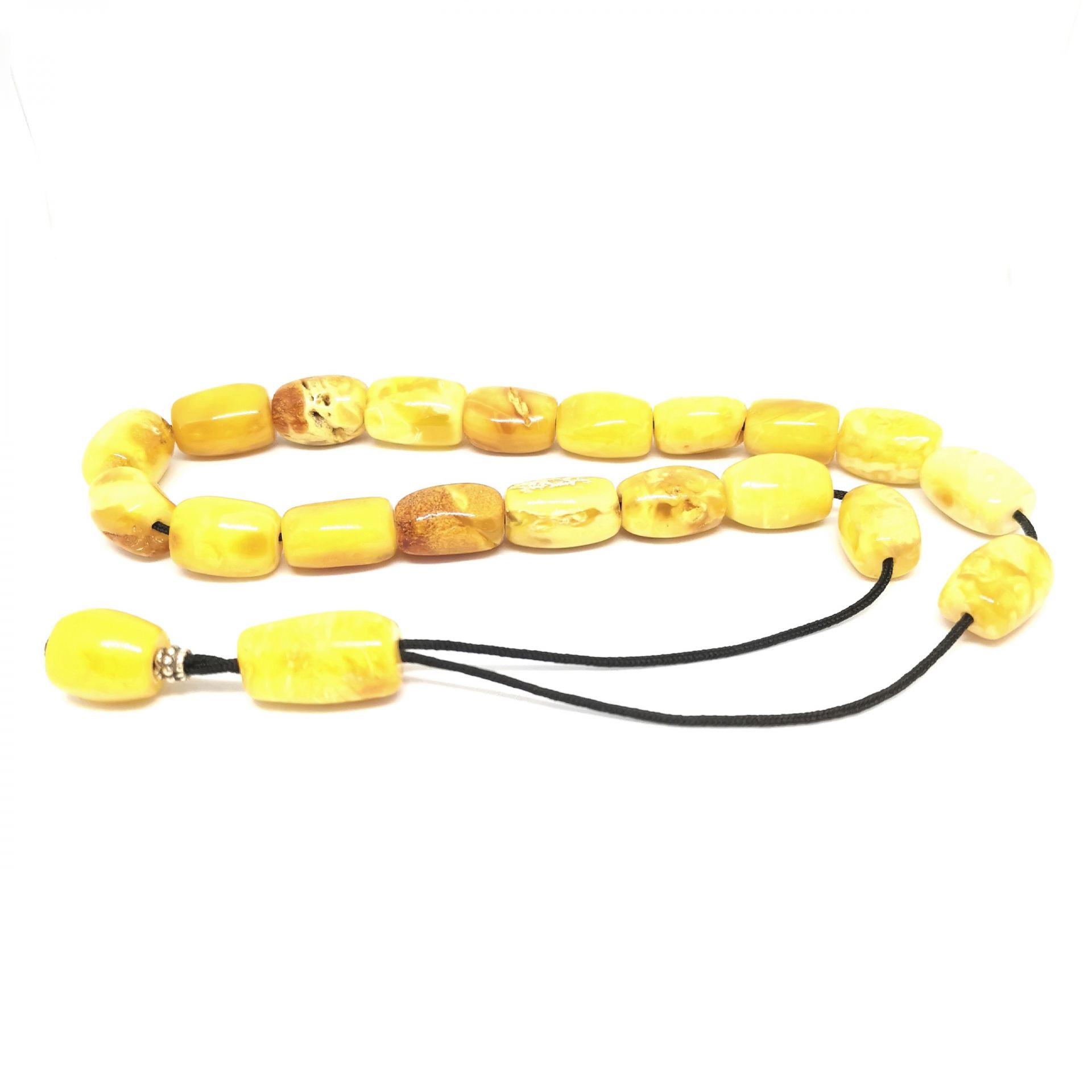
600,00 €

550,00 €
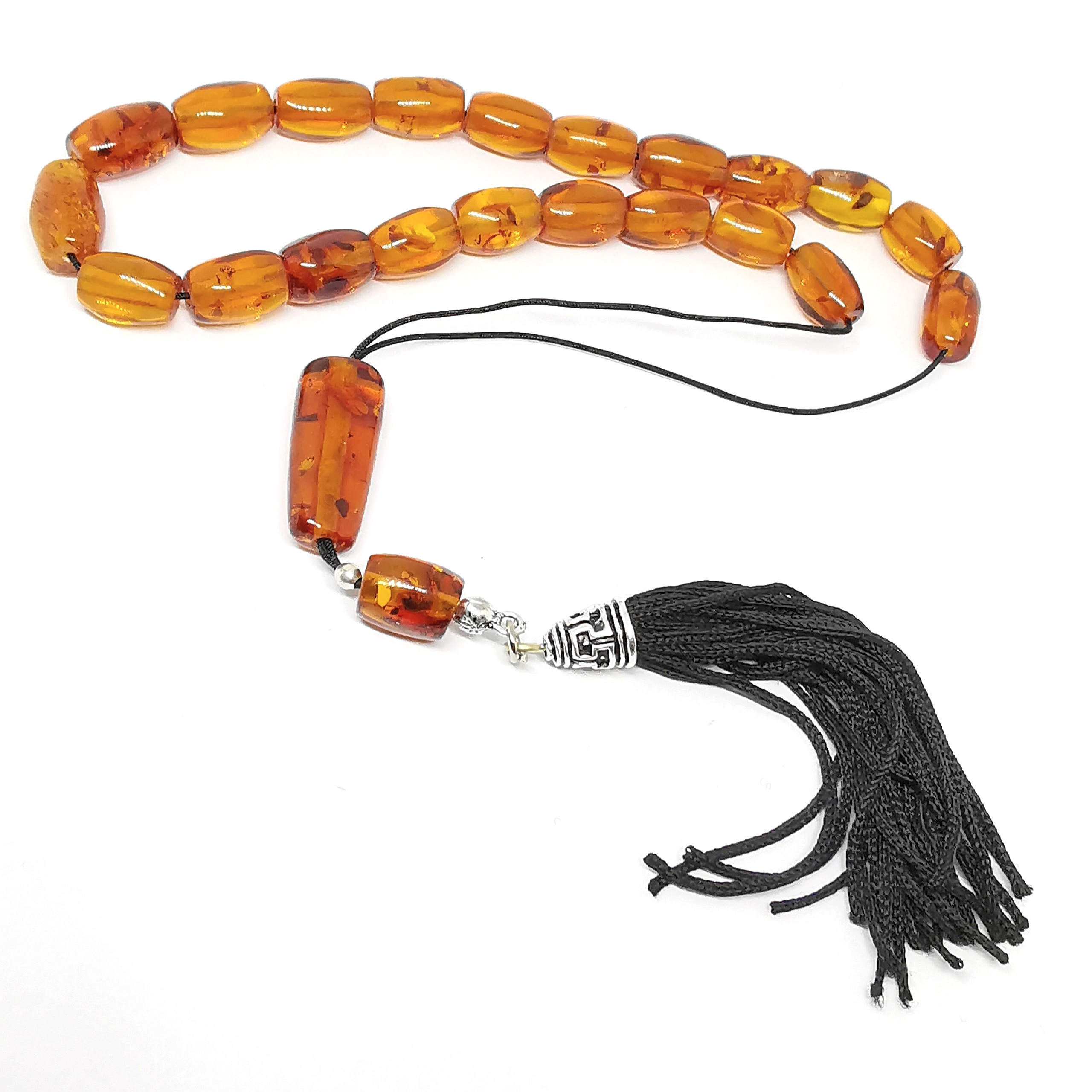
654,00 €

990,00 €
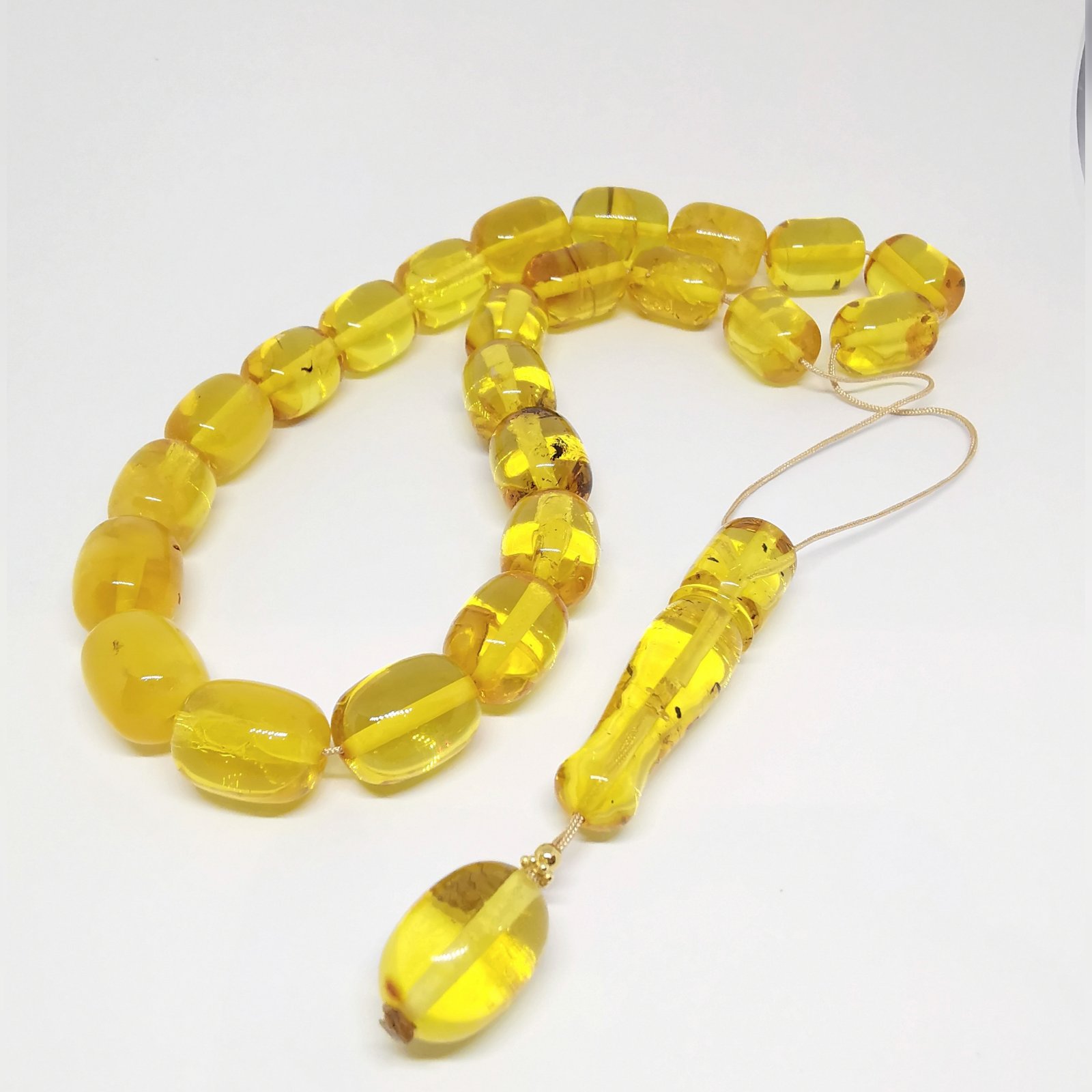
415,00 €
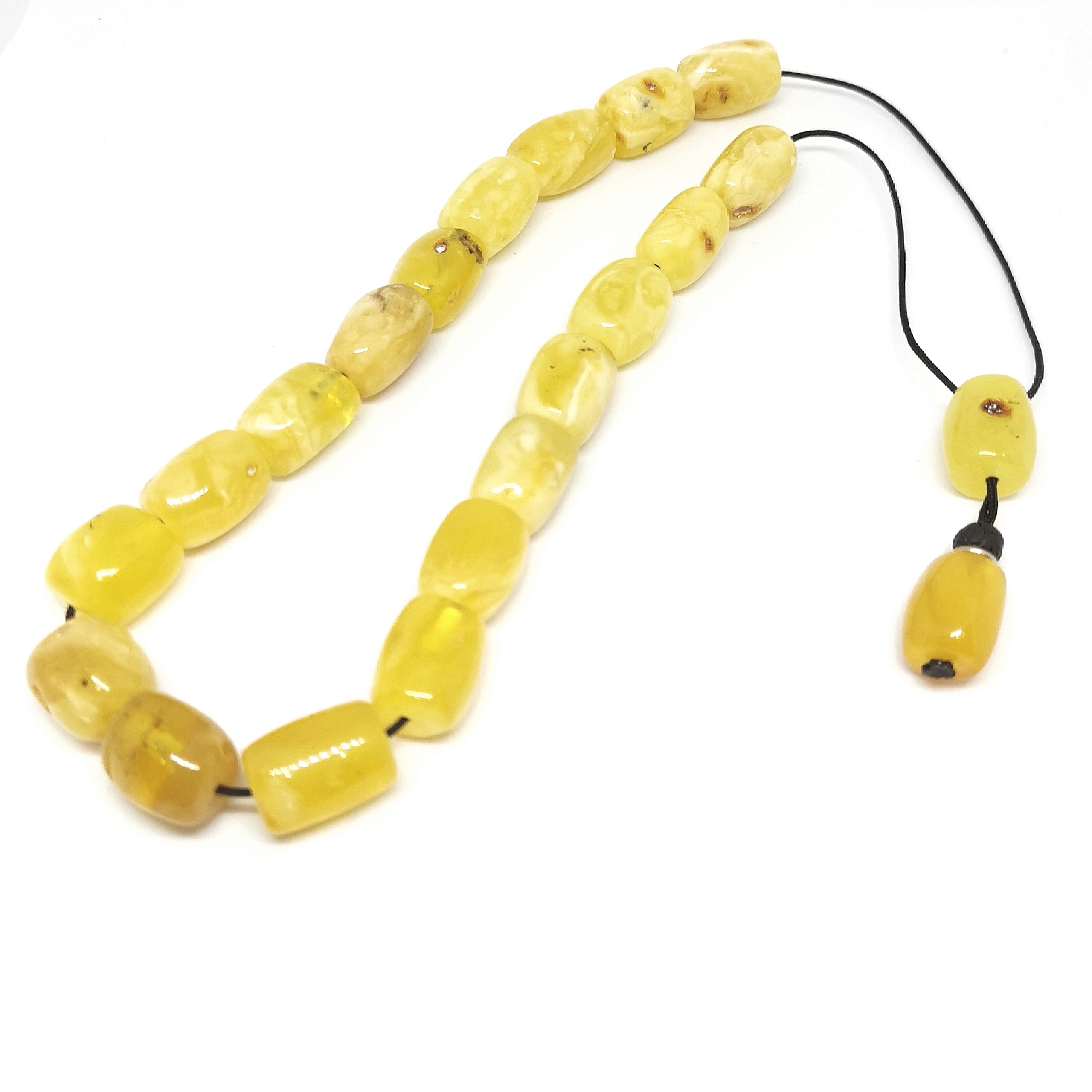
570,00 €

325,00 €
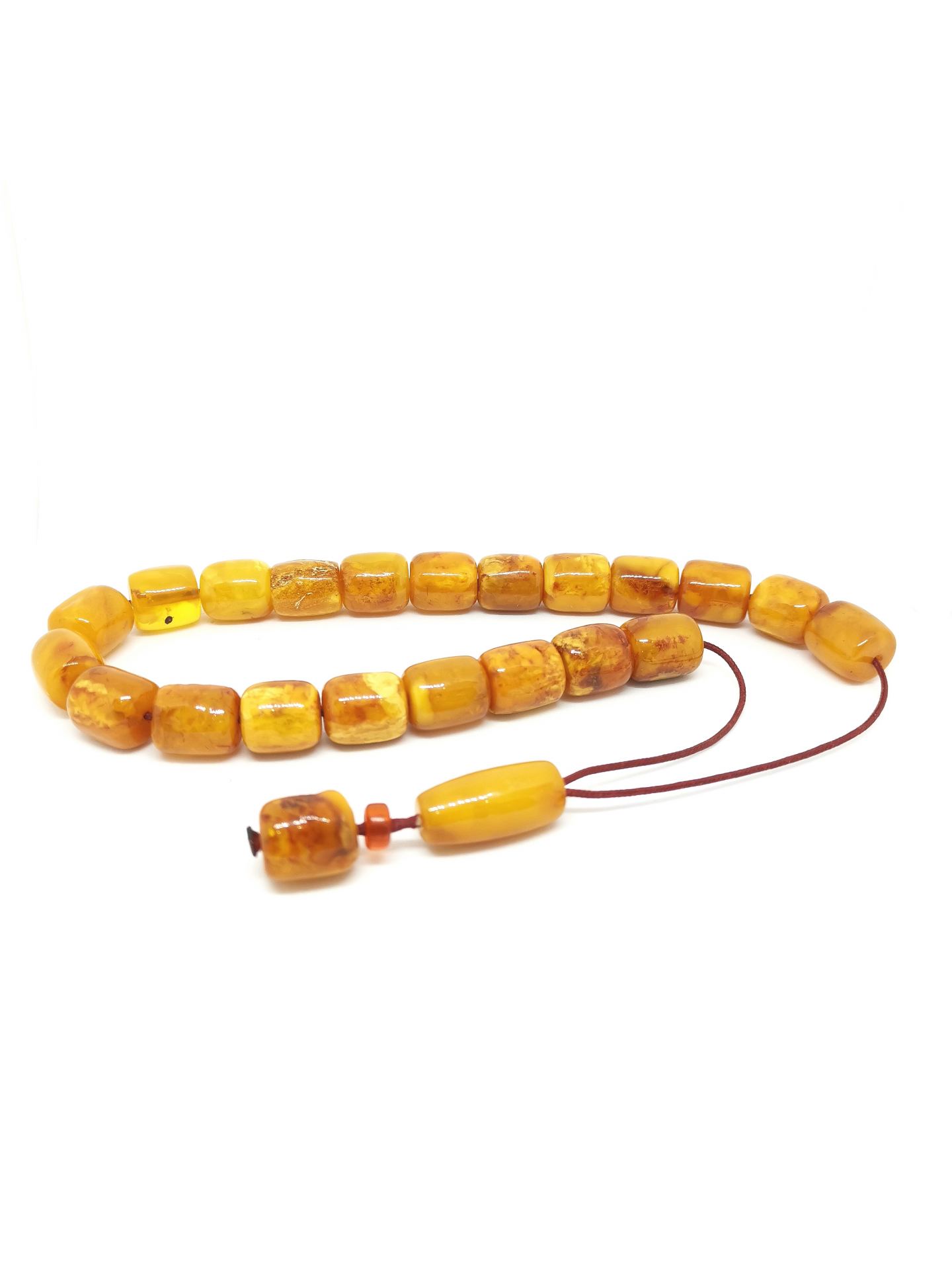
810,00 €
Amber
Amber is one of the oldest and most valuable natural organic materials used by humans. Although it is often referred to as a gemstone, it is actually not a mineral, but fossilized plant resin, which originated mainly from ancient coniferous trees millions of years ago. Over time, the natural resin underwent complex geological processes, such as pressure, temperature, and polymerization, gradually transforming into the amber we know today.
Name
The ancient Greek name “elektron” gave its name to electricity. Ancient Greeks observed that when amber is rubbed with a cloth, it acquires a static electric charge and attracts small objects, making this one of the earliest recorded observations of the phenomenon of static electricity.
Origin
The most important and highest-quality amber comes from the Baltic countries, where it formed approximately 44 to 50 million years ago. Significant deposits also exist in Ukraine, Poland, Germany, the Dominican Republic, Mexico, and Myanmar. Baltic amber is considered the most famous and sought-after, as it naturally contains a higher amount of succinic acid, a characteristic that sets it apart from many other varieties.
Physical Characteristics
Amber is remarkably lightweight and warm to the touch, unlike most gemstones. It has a hardness of 2–2.5 on the Mohs scale, which makes it softer than quartz and requires careful handling. Its surface achieves an exceptional shine after careful polishing, while its low specific gravity makes it particularly pleasant to use in worry beads (komboloi) and jewelry.
Its natural color displays great variety and can be transparent or opaque, in shades of honey, gold, cognac, cherry, lemon, green, white, and more rarely, blue or black. Natural color variations, internal cloudiness, and tiny bubbles are proof of its authenticity, making every piece unique.
Inclusions
While the resin was still fluid, tiny insects, spiders, leaves, pollen, seeds, air bubbles, or other organic remains could become trapped inside it. Through fossilization, these were preserved virtually unchanged for millions of years, offering valuable insights to paleontology. Natural inclusions significantly increase an amber piece’s collectible and commercial value, especially when preserved in exceptional condition.
History
Amber has been used by humans for more than 6,000 years. It has been found in prehistoric settlements, royal tombs, and archaeological sites across Europe and the Middle East. In antiquity, it was a valuable trade commodity along the famous “Amber Road,” which connected the Baltic coast to the Mediterranean.
Ancient Greeks valued it both for its beauty and its unique physical properties, while the Romans used it to craft jewelry, amulets, and highly valuable decorative objects. Across many cultures, people used it as a symbol of light, life, and prosperity.
Traditional Symbolic Properties
According to the traditions of many cultures, people view amber as a symbol of light, optimism, and inner balance. Tradition holds that it fosters a positive mood, calm, confidence, and emotional stability, while people also use it as a protective charm against negative energy.
In some Native American traditions, it symbolizes vital force and humanity’s connection to nature, while other cultures used it as a good luck charm and protective talisman. The above properties reflect traditional beliefs and are not backed by scientific research.
Uses
Thanks to its unique aesthetic and low density, amber is one of the most popular materials for crafting worry beads (komboloi), prayer beads, bracelets, necklaces, earrings, rings, and collectible items. It pairs exceptionally well with 925 sterling silver, gold, and natural precious or semi-precious gemstones, creating timeless jewelry of fine aesthetic appeal.
Care Instructions
Amber is a natural organic material that requires special care. Clean it using only a soft, dry, or slightly damp cloth. Avoid contact with alcohol, acetone, perfumes, chemical cleaners, detergents, and abrasive materials, as they can damage its surface. Protect it from prolonged exposure to high temperatures, intense sunlight, and sudden temperature shifts.
Note
Amber is a natural organic material, not a mineral gem. Due to its natural composition, it may experience a slight loss of surface shine, develop a subtle patina, or undergo minor surface changes over time from normal use. These characteristics reflect the material’s natural evolution and are not manufacturing defects.
Its natural beauty, historical value, and unique organic origin make amber one of the most timeless and beloved materials in the crafting of jewelry and handmade worry beads (komboloi), keeping its charm undiminished for thousands of years.
Note:
Careful use of the komboloi is recommended. Natural lines, pores, or subtle surface irregularities are inherent characteristics of the material and confirm its authenticity.
| New Cut Amber |
|---|