
 Ελληνικά

The photo may not represent 100% of the product features.

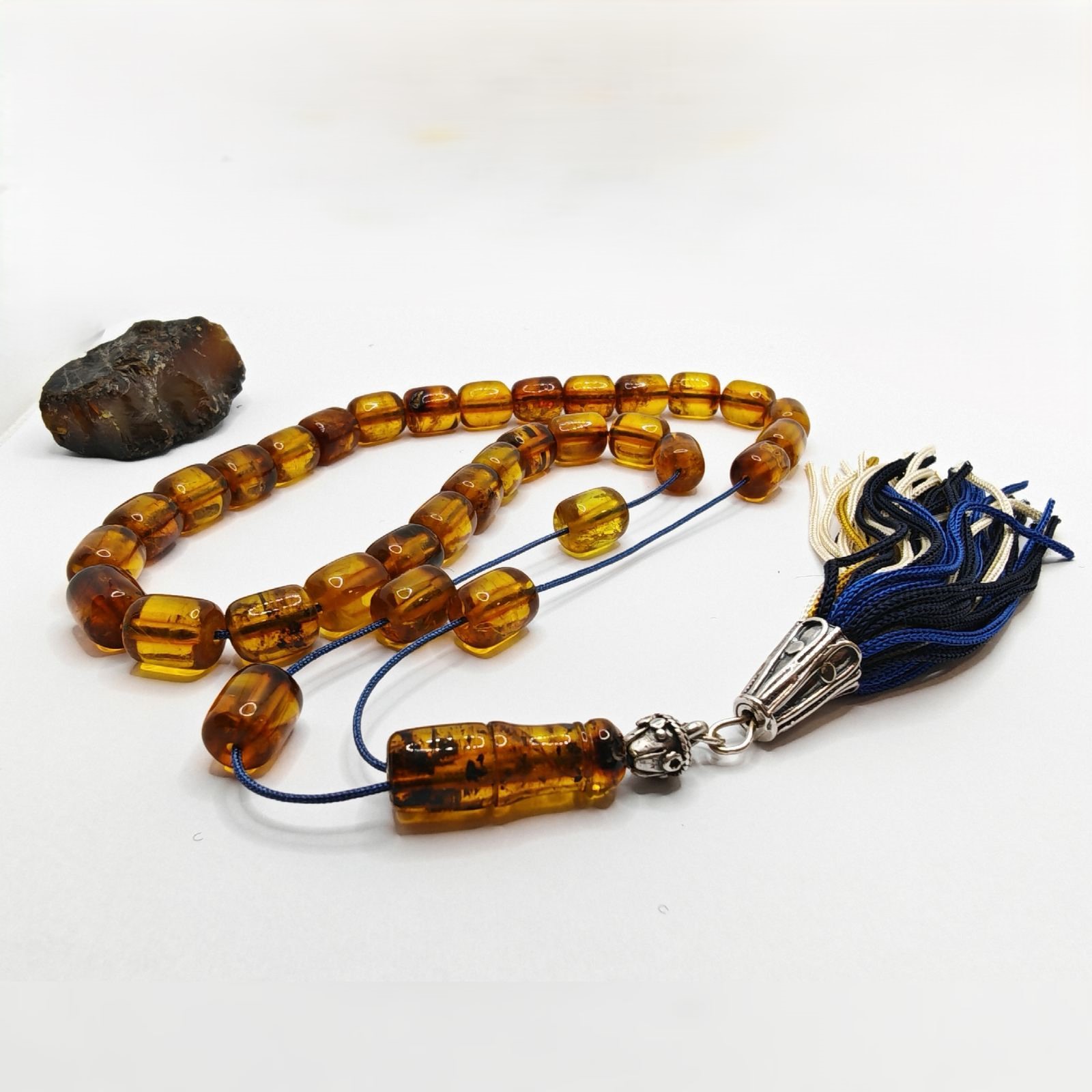

Dominican Blue Amber Komboloi AN0055
Dominican blue amber komboloi, consisting of 33 beads measuring 9 mm × 11 mm, finished with a handmade silk tassel in 925 sterling silver.
The komboloi measures 30 cm in length and weighs 28 g.
Presented with a certificate of authenticity
Note: Inclusions, natural fissures, and fracture surfaces are natural characteristics that further attest to the authenticity of the material.
650,00 €
In stock
Amber is a fossilized resin from pines and other conifers that is several thousand to millions of years old. Although it is not a stone, but a hardened resin, it is used as a gemstone for the manufacture of jewelry and other decorative objects. Due to its beneficial properties it has been treasured as one of the most popular gemstones since ancient times.
Blue amber from the Dominican Republic is considerably more expensive than Baltic amber.
The reasons are threefold:
Rarity – The deposits in the Dominican Republic are limited and extraction is challenging, whereas the Baltic region has historically produced amber in much larger quantities. It is a rare variety of blue amber that displays a distinctive blue hue when exposed to ultraviolet light or under sunlight reflection.
Variety & quality – Dominican amber is distinguished by its exceptional clarity, more vibrant hues, and the rare occurrence of blue amber, which can reach prices several times higher than Baltic amber.
Collectible value – The inclusions (insects, plants, and even small vertebrates) are often better preserved due to the distinct way the resin was formed, making Dominican amber highly prized by museums and collectors.
Baltic amber represents the classic and most widely available form, originating from deposits dating back 35–50 million years, with a long-standing presence in the market—hence its more accessible pricing. In contrast, Dominican amber, younger in age (16–20 million years), is significantly rarer, with limited reserves and more demanding extraction. It stands out for its exceptional transparency, rich color spectrum, and high-quality inclusions, while its exceedingly rare blue variety ranks among the most valuable types worldwide. Therefore, while Baltic amber serves the traditional and mass market, Dominican amber belongs to the collectible and premium category, commanding a correspondingly higher commercial value. The effect is due to natural fluorescence and may not be visible under all lighting conditions.
Avoid cleaning with any alcohol-based products.
Handle this komboloi with care.
| New Cut Amber |
|---|
All texts, product descriptions, and photographs are the intellectual property of KAHRAMAN. Any reproduction, distribution, or use, in whole or in part, without prior written permission is strictly prohibited. All rights reserved.
Related products
700,00 €
190,00 €

185,00 €
840,00 €
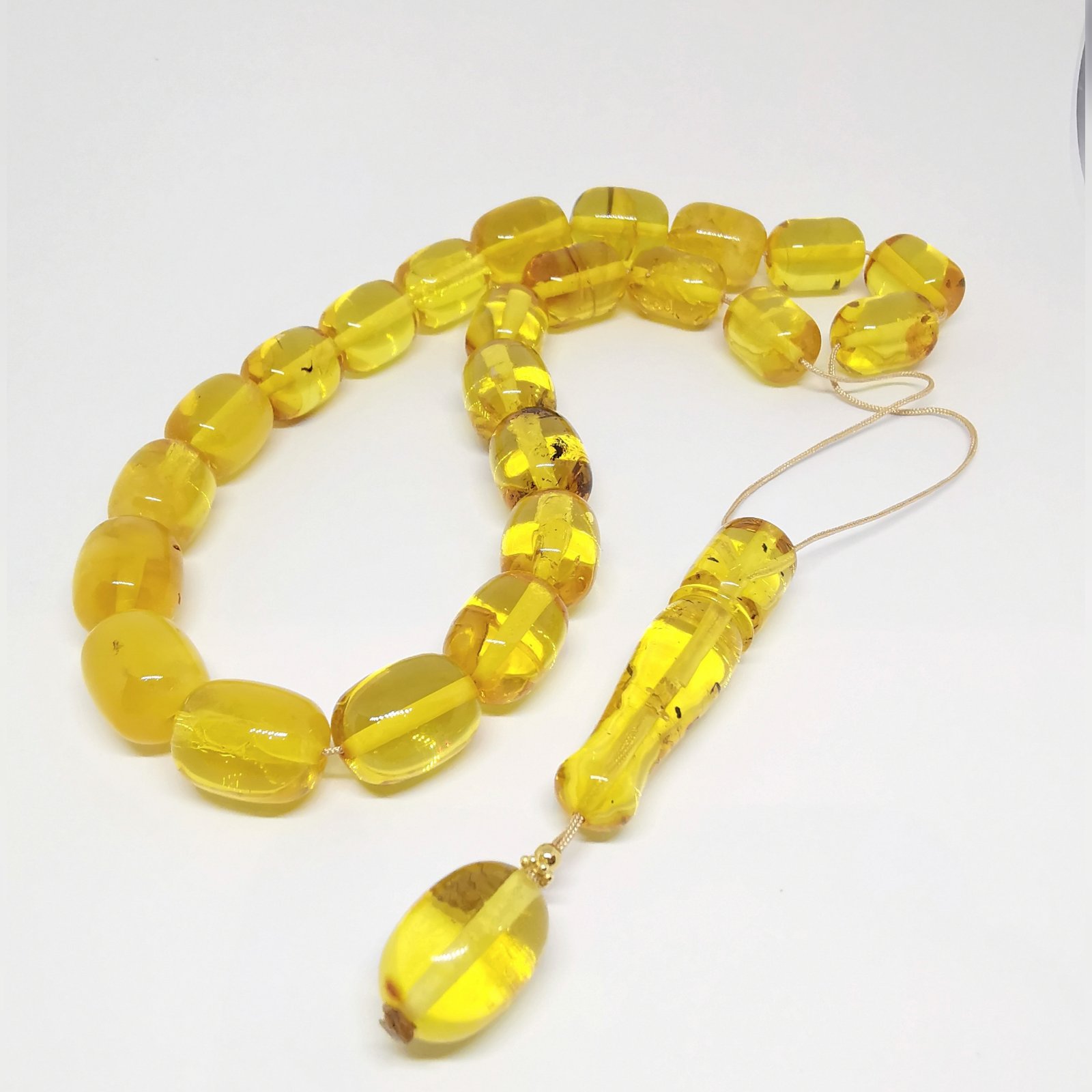
415,00 €
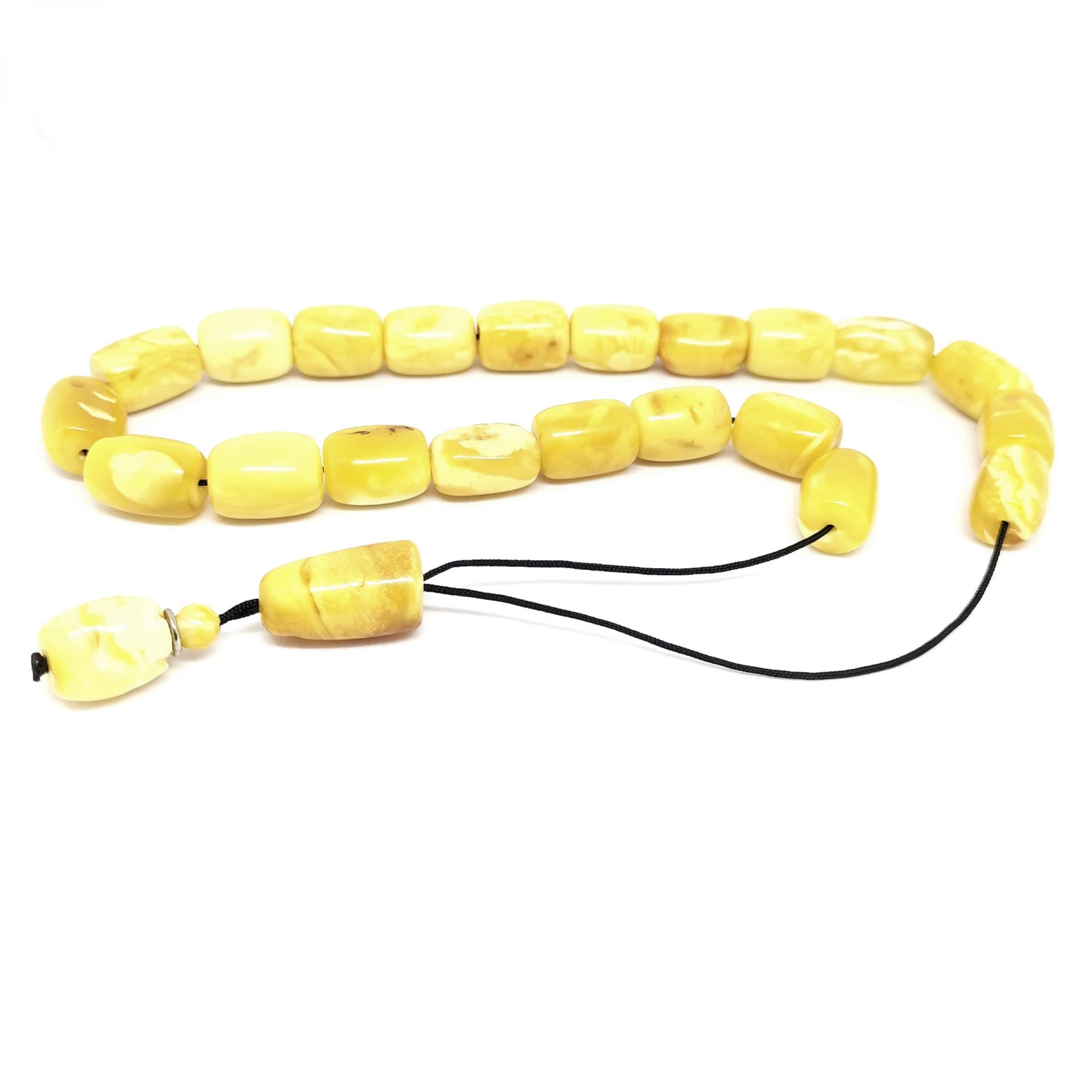
690,00 €
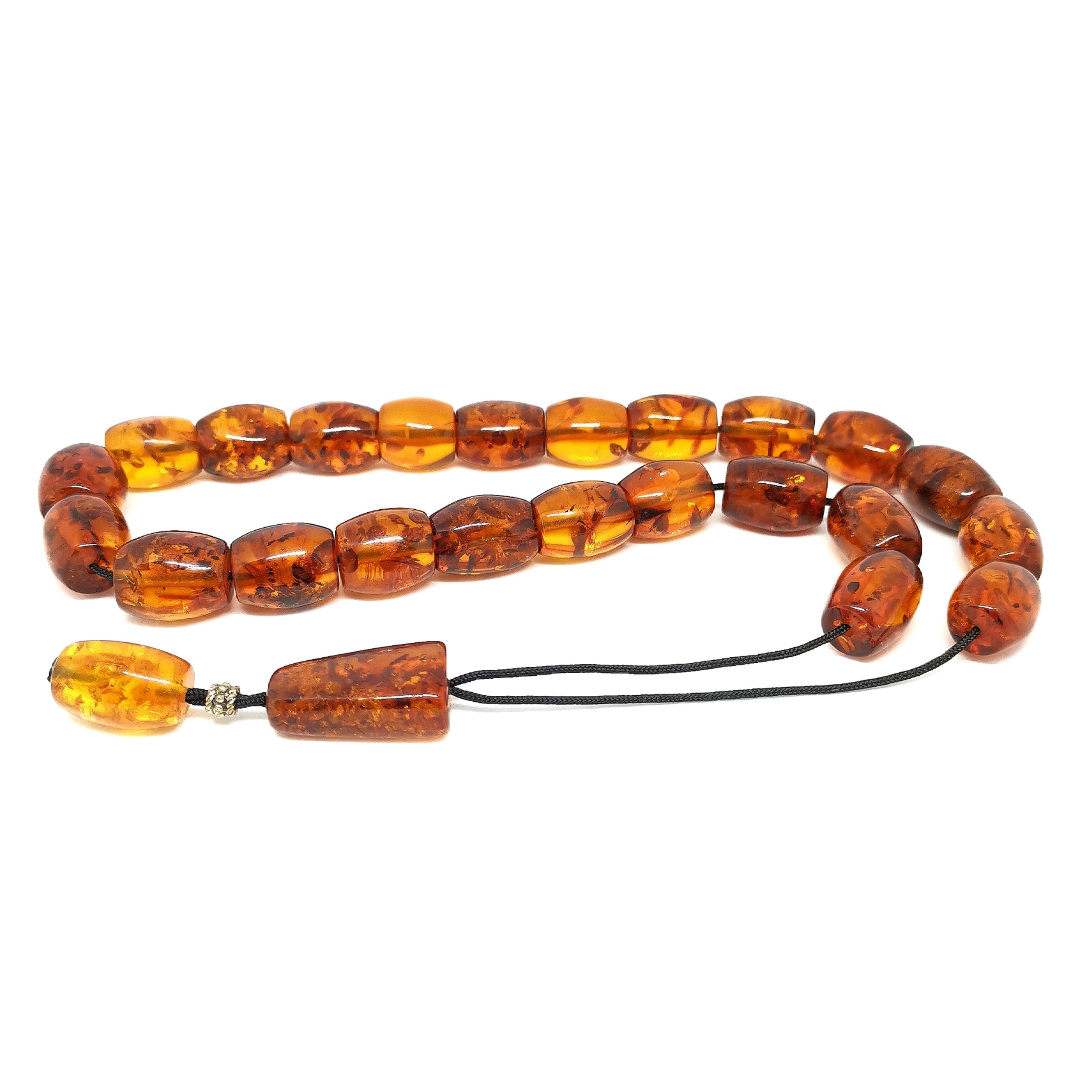
670,00 €


490,00 €
Amber is a fossilized resin from pines and other conifers that is several thousand to millions of years old. Although it is not a stone, but a hardened resin, it is used as a gemstone for the manufacture of jewelry and other decorative objects. Due to its beneficial properties it has been treasured as one of the most popular gemstones since ancient times.
Blue amber from the Dominican Republic is considerably more expensive than Baltic amber.
The reasons are threefold:
Rarity – The deposits in the Dominican Republic are limited and extraction is challenging, whereas the Baltic region has historically produced amber in much larger quantities. It is a rare variety of blue amber that displays a distinctive blue hue when exposed to ultraviolet light or under sunlight reflection.
Variety & quality – Dominican amber is distinguished by its exceptional clarity, more vibrant hues, and the rare occurrence of blue amber, which can reach prices several times higher than Baltic amber.
Collectible value – The inclusions (insects, plants, and even small vertebrates) are often better preserved due to the distinct way the resin was formed, making Dominican amber highly prized by museums and collectors.
Baltic amber represents the classic and most widely available form, originating from deposits dating back 35–50 million years, with a long-standing presence in the market—hence its more accessible pricing. In contrast, Dominican amber, younger in age (16–20 million years), is significantly rarer, with limited reserves and more demanding extraction. It stands out for its exceptional transparency, rich color spectrum, and high-quality inclusions, while its exceedingly rare blue variety ranks among the most valuable types worldwide. Therefore, while Baltic amber serves the traditional and mass market, Dominican amber belongs to the collectible and premium category, commanding a correspondingly higher commercial value. The effect is due to natural fluorescence and may not be visible under all lighting conditions.
Avoid cleaning with any alcohol-based products.
Handle this komboloi with care.
| New Cut Amber |
|---|