
 Ελληνικά

The photo may not represent 100% of the product features.
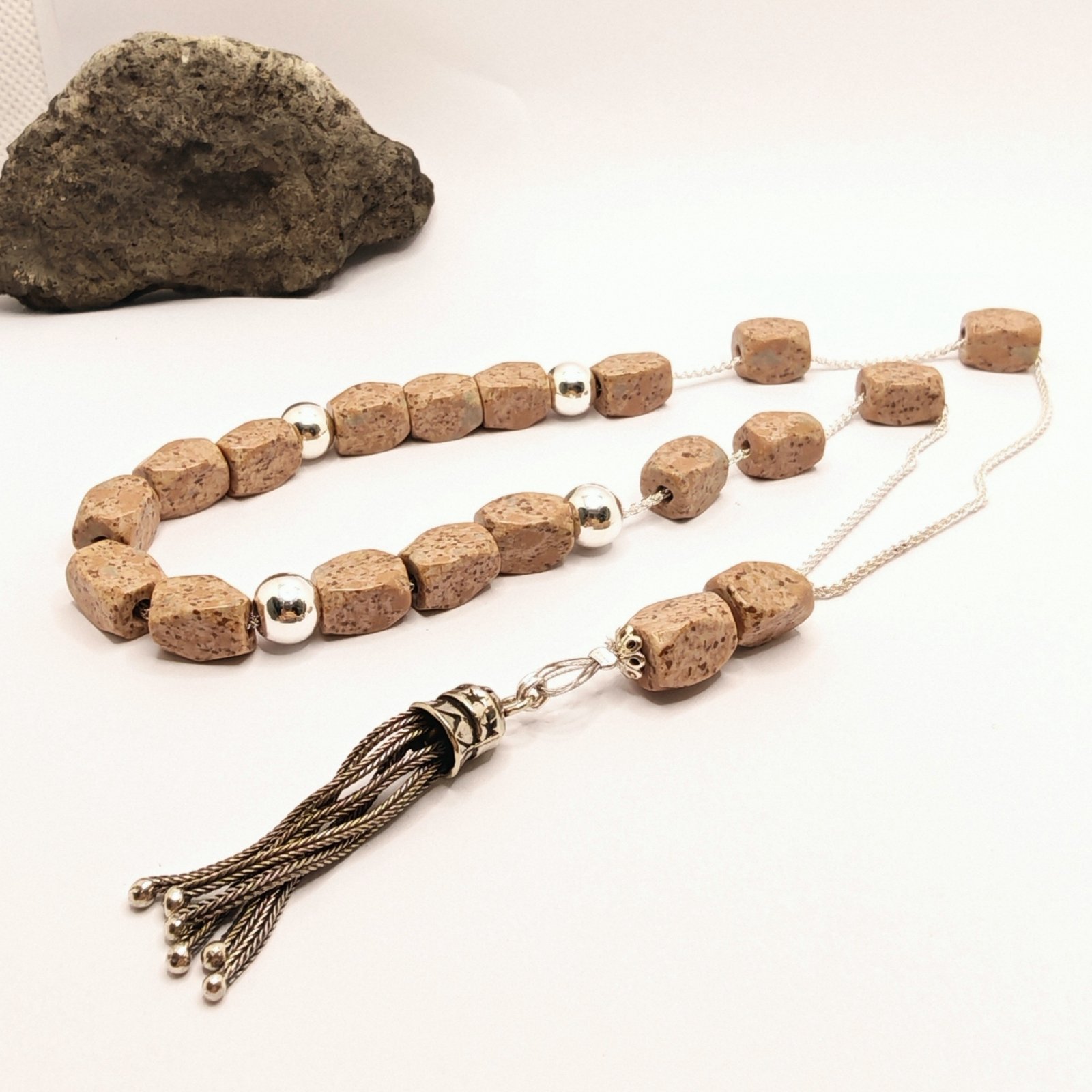
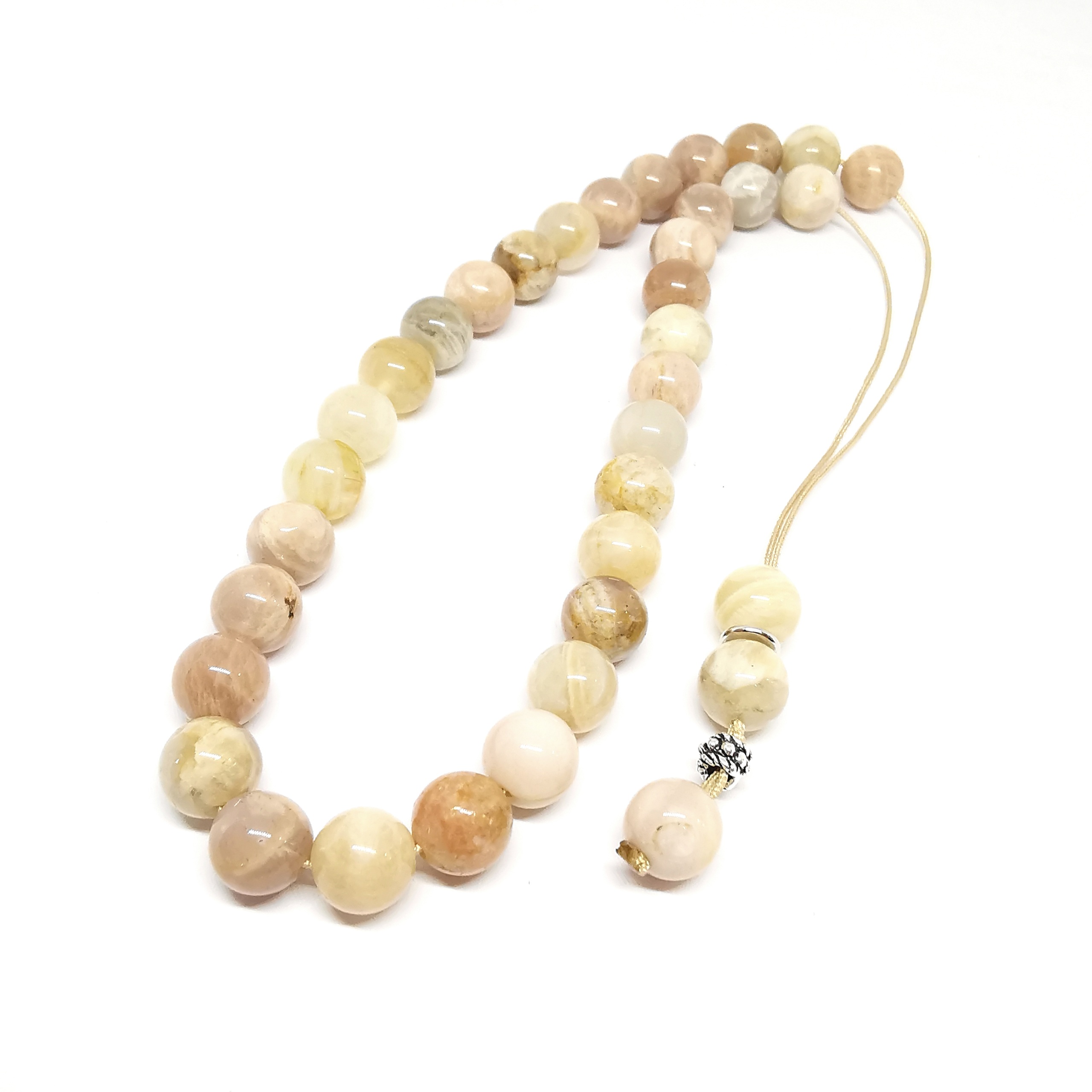
Granite Komboloi AC0085
Komboloi crafted from Granite with 925 sterling silver.
It consists of 17 beads measuring 8 mm x 10 mm and 4 beads with a diameter of 8 mm, all strung on a high-strength sterling silver chain.
The total length of the komboloi is 24 cm and its weight is 30 gr.
Accompanied by a certificate of authenticity.
85,00 €
In stock
Granite is a common, coarse-grained, acidic, igneous, plutonic rock that is characterized by its great hardness. It belongs to the plutonic igneous rocks, as it was formed through the solidification and crystallization of magma within the Earth’s crust at great depth; therefore, it exhibits a fully crystalline, granular texture.
In fact, its name is derived from the Latin word “granum”, meaning grain and is due to its granular texture. For a plutonic rock to be classified as granitic, it must contain feldspars (alkali and plagioclase feldspars), as well as quartz, but usually, in addition to the essential minerals, granites contain ferromagnesian minerals, such as mica, amphiboles, pyroxenes etc. and accessory minerals, such as zirconia, apatite, titanite, etc. Its composition is the one that determines its color. It derives its name from the Latin word “grantum” which means “pomegranate”. In Persia it was considered to be a royal gemstone.
| Ημιπολύτιμες πέτρες | Granite |
|---|
All texts, product descriptions, and photographs are the intellectual property of KAHRAMAN. Any reproduction, distribution, or use, in whole or in part, without prior written permission is strictly prohibited. All rights reserved.
Related products
58,00 €
59,00 €

30,00 €

79,00 €
28,00 €

100,00 €

30,00 €
49,00 €
Granite is a common, coarse-grained, acidic, igneous, plutonic rock that is characterized by its great hardness. It belongs to the plutonic igneous rocks, as it was formed through the solidification and crystallization of magma within the Earth’s crust at great depth; therefore, it exhibits a fully crystalline, granular texture.
In fact, its name is derived from the Latin word “granum”, meaning grain and is due to its granular texture. For a plutonic rock to be classified as granitic, it must contain feldspars (alkali and plagioclase feldspars), as well as quartz, but usually, in addition to the essential minerals, granites contain ferromagnesian minerals, such as mica, amphiboles, pyroxenes etc. and accessory minerals, such as zirconia, apatite, titanite, etc. Its composition is the one that determines its color. It derives its name from the Latin word “grantum” which means “pomegranate”. In Persia it was considered to be a royal gemstone.
| Ημιπολύτιμες πέτρες | Granite |
|---|